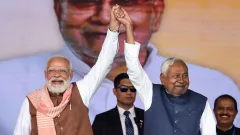
Nitish Kumar, the long-serving chief minister of Bihar and one of the most influential political figures in the state, has announced that he will step down from his post to transition into a new role in national politics. The veteran leader, who has shaped Bihar’s political landscape for nearly two decades, confirmed that he plans to move to the federal parliament, marking a significant shift in his political journey.
In a message shared publicly, Kumar said that the new government in Bihar will have his full cooperation and guidance even after he vacates the chief minister’s position. His announcement has triggered intense discussions across political circles as parties and analysts assess what the decision means for the future leadership of the state.
The development could open the door for a new chief minister either from Kumar’s own Janata Dal United party or from the Bharatiya Janata Party, his coalition partner. As Bihar prepares for a possible leadership change, the decision also signals a turning point in the political career of a leader who has dominated state politics for much of the last twenty years.
Who is Nitish Kumar
Nitish Kumar is one of the most prominent political leaders in Bihar and a veteran figure in Indian politics. Born on 1 March 1951 in Bakhtiarpur in Bihar’s Patna district, he began his political career during the period of the JP movement led by Jayaprakash Narayan in the 1970s. Over the years, he established himself as a key leader in the socialist political tradition that shaped many leaders in northern India.
Kumar has served multiple terms as the chief minister of Bihar and is known for his administrative experience and political adaptability. His leadership has been marked by initiatives focused on governance reforms, infrastructure development, and social welfare programs aimed at improving education, roads, and public services in the state.
In November, he took oath as the chief minister of Bihar for a record tenth time after the Janata Dal United and its allies, including the Bharatiya Janata Party, secured a decisive victory in the assembly elections. Under his leadership, the coalition won 202 seats out of the 243 seats in the Bihar Legislative Assembly, reaffirming his influence in state politics.
Why Nitish Kumar is Resigning as Bihar CM
Nitish Kumar’s decision to step down from the chief minister’s post comes as he prepares to transition to the national political arena. According to his statement, he plans to become a member of the Rajya Sabha, the upper house of India’s parliament. The move would allow him to continue participating in public life while stepping away from the demanding responsibilities of state administration.
Party colleagues have indicated that discussions about Kumar vacating the chief minister’s position have been underway for some time. Some leaders within his party have suggested that concerns about his health and the physical demands of governing a large state played a role in shaping the decision.
Kumar also emphasized that the trust and support of voters had allowed his government to serve Bihar with dedication. While the resignation marks the end of another chapter in his tenure as chief minister, he has made it clear that he will remain involved in guiding the state government and supporting the coalition leadership.
Political Reasons Behind the Resignation
Beyond personal considerations, the decision also carries significant political implications. Analysts believe that Kumar’s move to parliament could create an opportunity for the Bharatiya Janata Party to stake a claim to the chief minister’s post in Bihar. Despite being a dominant political force nationally, the BJP has not yet formed a government on its own in the state.
Five Rajya Sabha seats from Bihar are expected to become vacant soon as the terms of outgoing members end. With strong representation in both the state assembly and the national parliament, the ruling alliance has the numbers required to elect new members comfortably. Kumar’s entry into the upper house could therefore fit into a broader political strategy.
At the same time, the decision has not been universally welcomed within his own party. Some leaders of the Janata Dal United have publicly expressed concern about the leadership change. They argue that voters supported the coalition largely because of Kumar’s leadership and that his departure from the chief minister’s position could create uncertainty among supporters.
What This Means for Bihar Politics
Nitish Kumar’s resignation is likely to reshape the political dynamics of Bihar in the coming months. For nearly two decades, he has been the central figure in the state’s governance and electoral politics. A transition in leadership could therefore influence the balance of power within the ruling alliance as well as the broader political environment.
Bihar is one of India’s most populous states, with more than seventy million voters, and it plays a crucial role in national politics. The state also faces significant economic challenges, including widespread poverty and large-scale migration of workers to other parts of the country in search of employment. Political stability is therefore seen as essential for continuing development efforts.
If a leader from the BJP becomes chief minister, it would mark the first time the party holds the top post in Bihar. Such a development could significantly alter the political equation between coalition partners and potentially influence electoral strategies ahead of future state and national elections.
Who Could Be the Next Bihar Chief Minister
As Nitish Kumar prepares to step down, speculation has intensified about who will succeed him as Bihar’s chief minister. The decision is expected to be made by the leadership of the ruling alliance after consultations between the Janata Dal United and the Bharatiya Janata Party.
Some political observers believe that the BJP may push for a leader from its own ranks to take charge of the government. Party representatives have indicated that the parliamentary board of the BJP will play a key role in determining the candidate if the position goes to the party.
However, the possibility of a leader from the Janata Dal United continuing in the role cannot be ruled out. Since the coalition won a strong mandate in the assembly elections, the choice of the next chief minister will depend on political negotiations, internal party discussions, and the broader strategy of the ruling alliance.
Regardless of who eventually assumes the position, Nitish Kumar’s decision marks a defining moment in Bihar’s political history. His long tenure has left a lasting impact on governance and development in the state, and the transition to new leadership will be closely watched by voters, political observers, and leaders across the country.
References: Veteran Bihar chief minister to step down for move to parliamentAlso Read: Mojtaba Khamenei Elected Iran Supreme Leader Amid War